
No products in the basket.
Industrial Anti-Slip Safety
How to Stop Decking Being Slippery: A Practical Guide
22
May
May
Timber and composite decking can turn dangerously slippery in autumn and winter. The good news is that slippery decking is straightforward to fix. Here is how to make yours safe.
Why does decking get slippery?
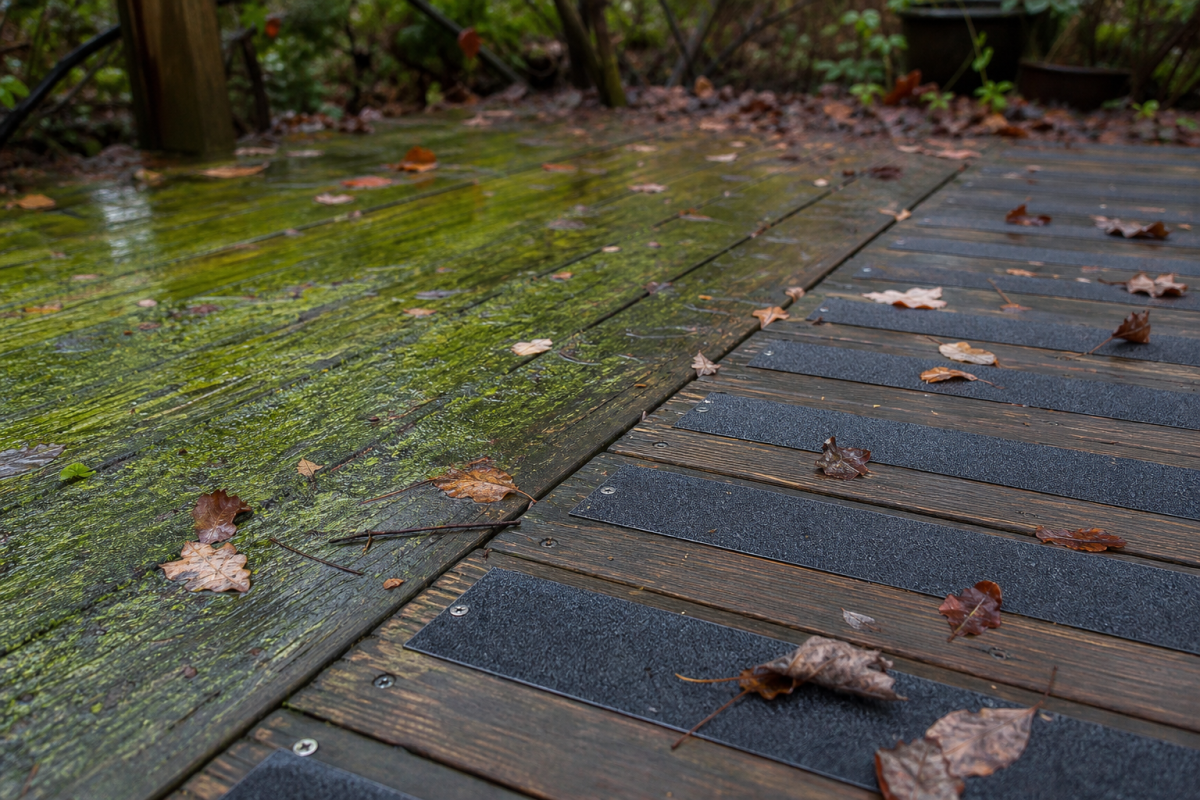
The usual culprit is a thin film of algae, moss and damp that builds up on the surface, especially in shaded, north-facing or tree-covered areas. Smooth and grooved boards both suffer, and the problem returns every wet season.Step one: clean it
Start by removing the build-up. Sweep off debris, then scrub with a stiff brush and a dedicated decking or algae cleaner, or use a pressure washer on a low setting (too high can damage soft timber). Cleaning helps, but it is temporary; the algae returns, so on its own it rarely makes decking reliably safe.Step two: add permanent grip
For a lasting fix, fit anti-slip decking strips. Made from tough gritted GRP, they screw straight onto your existing boards to give a high-grip surface that works in wet, frosty and mossy conditions. They will not rot, rust or warp, and a typical lifespan is around ten years.Choosing and fitting strips
Pick your grit by use: fine for bare feet and light use, standard for most homes and businesses, and coarse for steps, ramps or heavy footfall. Fitting is a simple DIY job: pre-drilled, self-countersinking holes and supplied screws mean no adhesive is needed, and strips can be cut to any length to suit your boards and steps.Make your decking safe
Browse our anti-slip decking strips to restore grip to slippery decking, or our anti-slip floor sheets for larger areas and landings.Related products and guides
- Browse our anti-slip decking strips that screw straight onto existing boards
- Browse our anti-slip GRP floor sheets for ramps, walkways and wet areas
- Guide: Why tradespeople are switching to GRP decking boards